New Illumina Infinium EX genotyping arrays
When a virus outbreak occurs, understanding its genetic make-up quickly can provide valuable insights into how the virus is spreading and changing. At the Genomics Core Facility, we support researchers with the genomic technologies and infrastructure needed to generate these insights – sometimes when time is of essence.
An example is our long-standing collaboration with the Department of Virology at the Erasmus MC. Our facility has supported researchers, including Marjan Boter from the Pathogen Genomics group, with access to Nanopore sequencing technology, contributing to their research into virus outbreaks ranging from mpox in Africa to a recent hantavirus outbreak on a cruise ship.
From mpox outbreak sequencing to a newly identified variant
Marjan and her colleagues gained extensive experience sequencing the mpox virus during the global outbreak in 2022. Mpox is caused by a DNA virus, and sequencing its genome enables researchers to identify genetic differences between virus samples and to study how different variants emerge and spread.
This expertise was subsequently shared with researchers in Rwanda, where Marjan and colleagues trained local analysts and postdoctoral researchers in sequencing techniques. Working with researchers from the Democratic Republic of the Congo, they identified a new mpox variant affecting a broader population, including women and children. Their findings contributed to a better understanding of the outbreak and supported the rapid public health response.

Marjan Boter, researcher in the Pathogen Genomics group, uses genomic sequencing to better understand how viruses emerge, change and spread.
Speed matters during an outbreak
More recently, the Virology team applied genomic sequencing during an outbreak of Andes hantavirus on a cruise ship. By rapidly sequencing samples, the researchers were able to obtain a detailed picture of the virus's genetic composition and investigate possible transmission routes. The sequence was quickly made available so other hospitals and laboratories could use the information in their own work.
This is where technologies such as Nanopore sequencing can be particularly valuable. Nanopore technology produces long sequencing reads, making it possible to reconstruct complete viral genomes efficiently. Its speed is another important advantage: during an outbreak, rapid access to genomic information can help researchers and public health professionals understand what they are dealing with sooner.
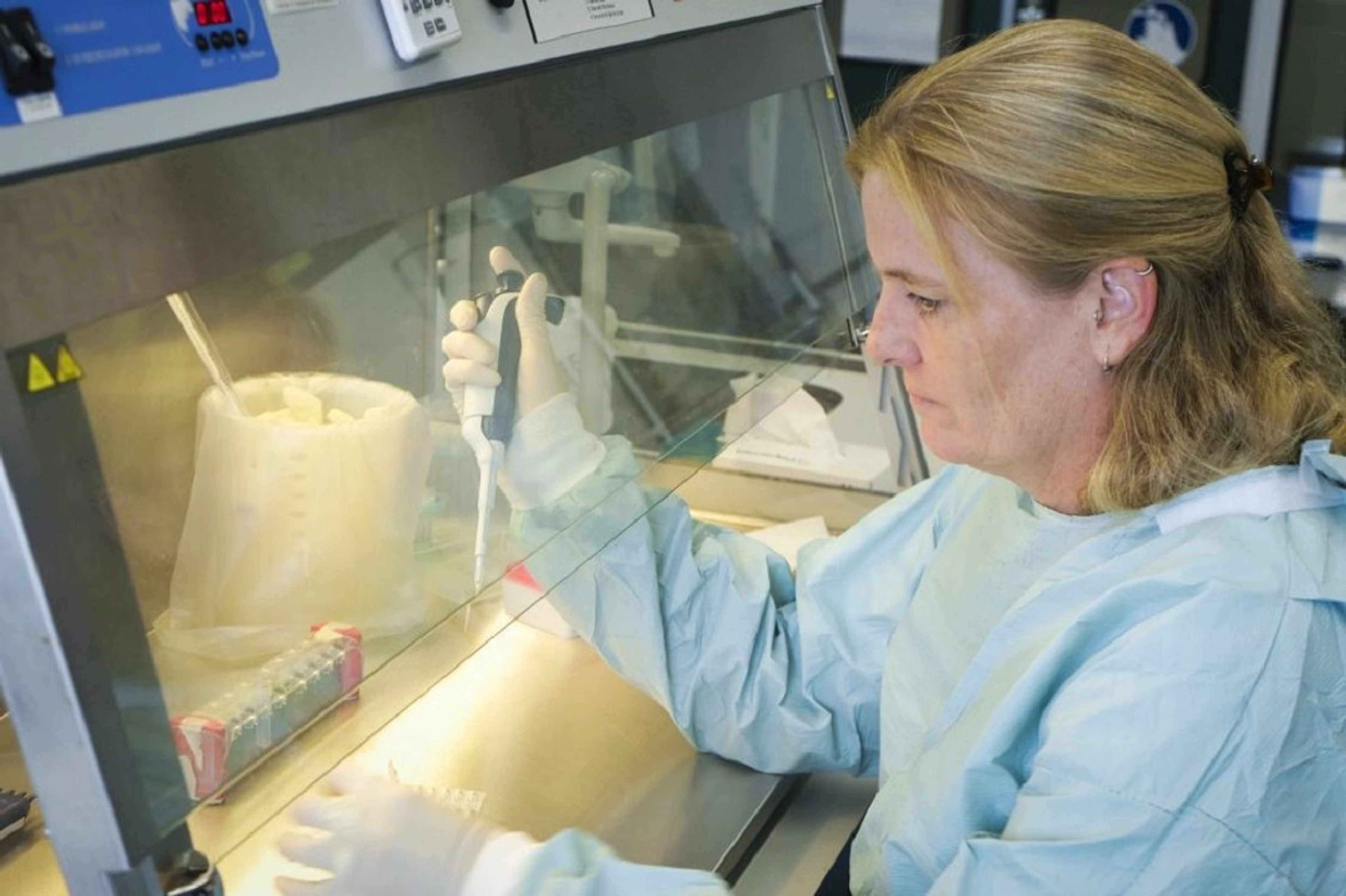
Marjan at work in the laboratory as part of her research into virus outbreaks.
A long-standing collaboration in genomics
Our collaboration with Virology goes back many years. During the COVID-19 pandemic, the Genomics Core Facility provided access to Nanopore sequencing technology to support viral genome sequencing. Our colleague Marijn Verkerk also supported the development of the database infrastructure needed to process and organise the resulting genomic data.
We are proud that our technologies, infrastructure and expertise continue to support the work of our colleagues in Virology. It is a strong example of what collaboration across disciplines can achieve: bringing together virological expertise and advanced genomics to generate knowledge that can be put into practice when it matters.
Photo credits: Esther Morren
Related pages
Get in touch
For general inquiries or more information about our services, please contact us.