Advancing Personalised Medicine Through the Genome of Europe
A new paper in Nature Genetics, co-authored by a researcher in the Population Genomics group at Erasmus MC, employs advanced molecular biology techniques and computational tools to identify key genetic drivers of six autoimmune diseases in a rare immune cell type.
Autoimmune diseases afflict millions of people worldwide, and genetic predisposition is a significant causal factor. While many conditions have no effective cure, the genes underlying disease susceptibility can provide clues for new treatments. Large-scale studies in populations (known as “genome-wide association studies”) have pinpointed genetic variants that influence a person’s risk of developing disease, but the affected genes and relevant cell types often remain unknown.
In a collaborative study published today, researchers from the UK, Belgium, the Netherlands and the USA teamed up to try to connect autoimmune disease-related variants to causal genes in rare immune cells known as type 3 innate lymphoid cells (ILC3s). Unlike most other immune cells, ILC3s are rarely found in the blood and instead reside in tissues, such as the lung and gut, where they coordinate immune signals. In autoimmune diseases, such as Inflammatory Bowel Disease, impaired signaling in these cells contributes to local tissue inflammation. However, ILC3s have been historically understudied, because they are difficult to obtain from tissues in large numbers.
The new data in ILC3s has been produced as part of a study led by Dr. Mikhail Spivakov and his team at the MRC Laboratory of Medical Sciences (Imperial College, London), where co-first author Dr. Helen Ray-Jones spent her first few years as a postdoctoral researcher. Over the past few years, the team had developed a lab technique for studying the structure of the genome in small quantities of cells, which they have now been able to apply to the rare ILC3s for the first time. Helen, who is now a researcher in the Population Genomics group at the Erasmus MC, said “This is a compelling story that has been several years in the making. Although my co-authors are now spread out across the world, we have all been motivated to complete this project so that we can make this new data in ILC3s available to the autoimmune disease research community.”
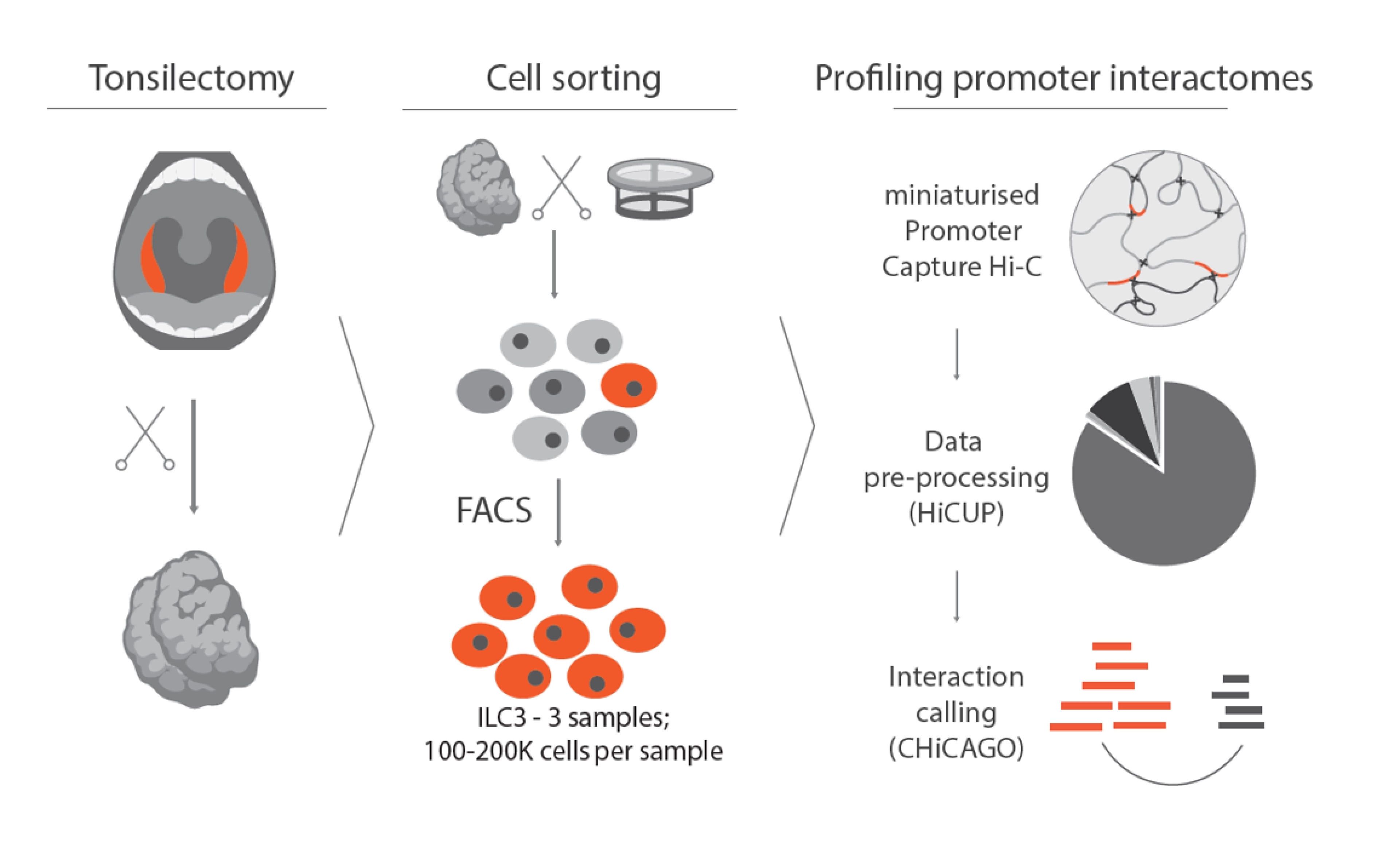
Image: workflow for profiling the 3D genome in ILC3 cells in the project (Figure 1, Malysheva/Ray-Jones/Lakes et al., Nature Genetics 2026)
Why gene regulation matters for autoimmune disease
Genes are the regions of the genome that the cell uses to make proteins. However, outside of genes there are other important regions that control how the genes are activated, known as regulatory elements. Genetic variants predisposing to autoimmune diseases tend to be found within these elements, which suggests that they influence how genes are switched on and off, rather than the makeup of genes and proteins themselves. These “molecular switches” differ between cell types and, to make matters even more complex, can be far away along the DNA strand from the genes they affect. By studying molecular properties of the genome such as its structure and shape in three dimensions (3D), researchers can connect regulatory elements to their target genes. “In this study we have mapped the 3D contacts between genes and regulatory elements in ILC3s for the first time”, said Mikhail. “With this information we are able to link disease-associated variants to their target genes.”
Some of the newly highlighted genes had never before been associated with immune function. Among them, the researchers identified the gene CLN3 as a regulator of inflammatory responses in Crohn’s disease. Previously, CLN3 was known only for its role in Batten disease, a rare neurological disorder. Co-first author Valeriya Malysheva, a fellow at the University of Cambridge and group leader at the VIB Center for Molecular Neurology in Belgium, said: “Finding that CLN3, a gene linked to neurological disease, also influences ILC3-mediated immune responses was a surprising and exciting discovery. It underscores the power of genome-wide integrative approaches to uncover unexpected connections, including those between the nervous and immune systems.”
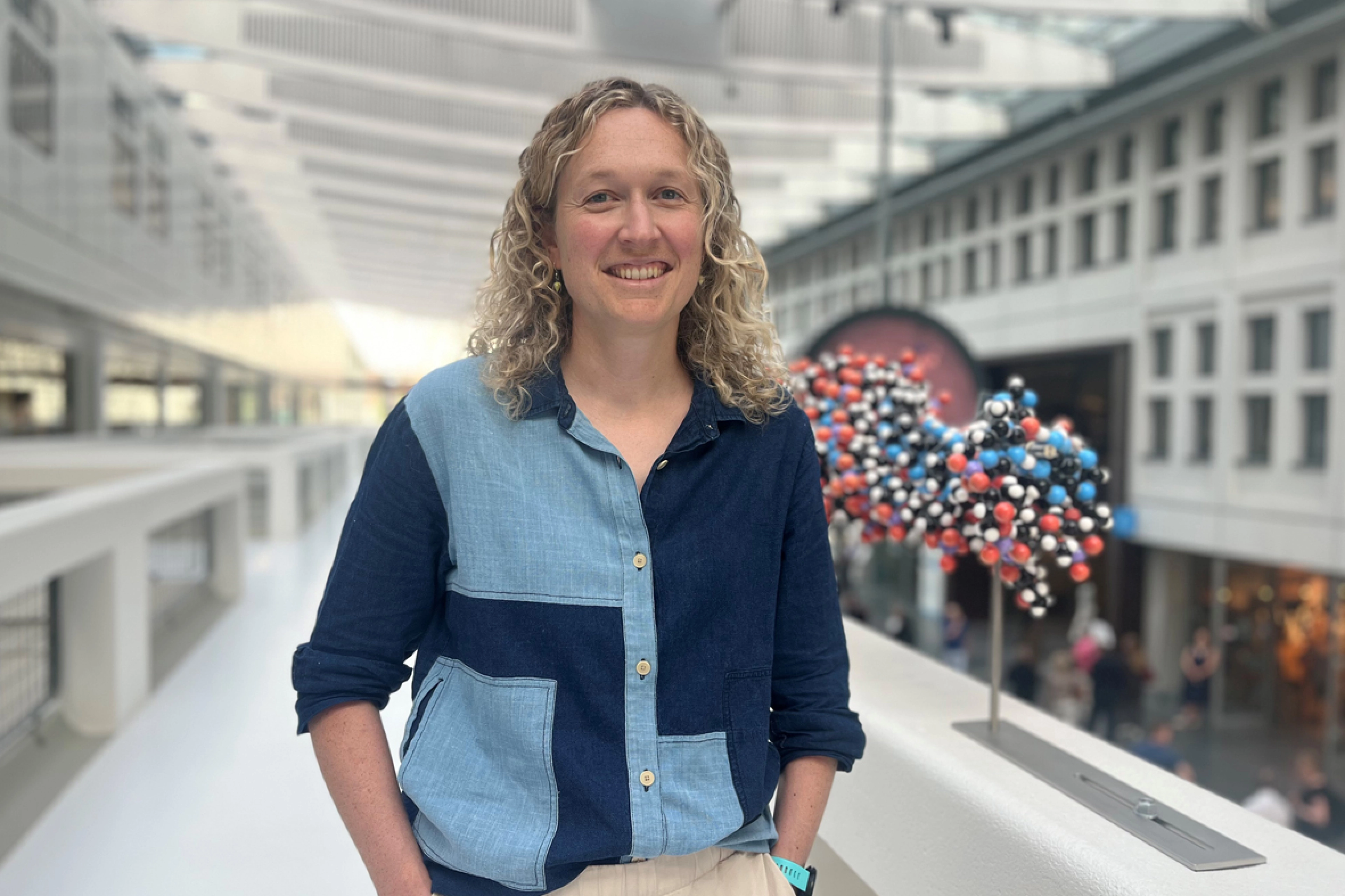
Image: Dr. Helen Ray-Jones, researcher in the Population Genomics group at the Erasmus MC
New pipelines for gene prioritisation in genome-wide association studies
Identifying causal genes in genome-wide association studies is a global research challenge for geneticists. Alongside the experimental innovations of this study, the authors also developed a computational tool to rank genes, based on the weight of evidence for their connections with disease-associated genetic variants.
Here at the Erasmus MC, the Genomics Core Facility has recently formed a focus group to develop an in-house computational pipeline for identifying causal genetic variants, genes and molecular mechanisms in genome-wide association study results, integrating tools such as the one reported in the paper. Helen said “It’s important for our focus group to develop a pipeline that incorporates the current gold standard computational tools and enables the input of high resolution, cell type-specific data - such as the genome’s 3D structure. The pipeline will be structured in a clear and interpretable way and designed to benefit as many research lines as possible”. The technical lead of the focus group, CoFa bioinformatician and PhD candidate Jard de Vries, added: “The outputs of this pipeline will provide the user with a clear insight into the molecular mechanisms likely occurring in each disease region in the genome. Furthermore, by adhering to new global standards in making research data Findable, Accessible, Interoperable and Reusable (FAIR), we will contribute to the general reproducibility of science and help to accelerate the translation of genome-wide association studies to clinical benefit.”
What’s next? Taking things to the single cell level
While the data published in the paper provides an unprecedented view of genetic mechanisms in ILC3s, scientists in the Laboratory of Population Genomics are now investigating new, powerful ways in which cellular models can help us better understand disease. In the iCell flagship, which is a cross-institute program involving Erasmus MC, TU Delft and the Erasmus University and co-led by Professor Joyce van Meurs (head of the Erasmus MC Genomics Core Facility), researchers are developing stem cell cultures that incorporate cells from multiple individuals; a so called “village in a dish” system. These stem cells can be transformed into all kinds of disease-relevant cells. By employing cutting edge single-cell methodologies, the researchers will be able to explore how small differences in genome regulation between cells of the same individual, as well as genetic differences between individuals themselves, can shed light on the precise molecular mechanisms underlying gene regulation in disease.
An application in an inflammatory skin disease
In June this year, Helen was awarded a 1-year Discovery grant from the National Psoriasis Foundation to use iCell technology to study the regulatory genome in single skin cells (keratinocytes), here at the Erasmus MC. “By combining the framework reported in our Nature Genetics paper with the insights from the iCell consortium, I hope to prioritise new gene targets in psoriasis”, she said. “This will provide critical information to help in developing effective and targeted medicines for psoriasis, a chronic skin condition that impacts the quality of life for many people across the world.”
References:
Malysheva/Ray-Jones/Lakes et al., Nature Genetics 2026, DOI: 10.1038/s41588-026-02681-0. Available here: https://www.nature.com/articles/s41588-026-02681-0
MRC Press Release:
Mapping the 3D genome in rare immune cells reveals new genes linked with autoimmune disease risk
Related articles about iCell:
iCELL - Individualized CELLular models of disease diversity in the population - Erasmus MC
Joyce is building a village in a petri dish to comprehend diversity - Amazing Erasmus MC
Related pages
Get in touch
For general inquiries or more information about our services, please contact us.